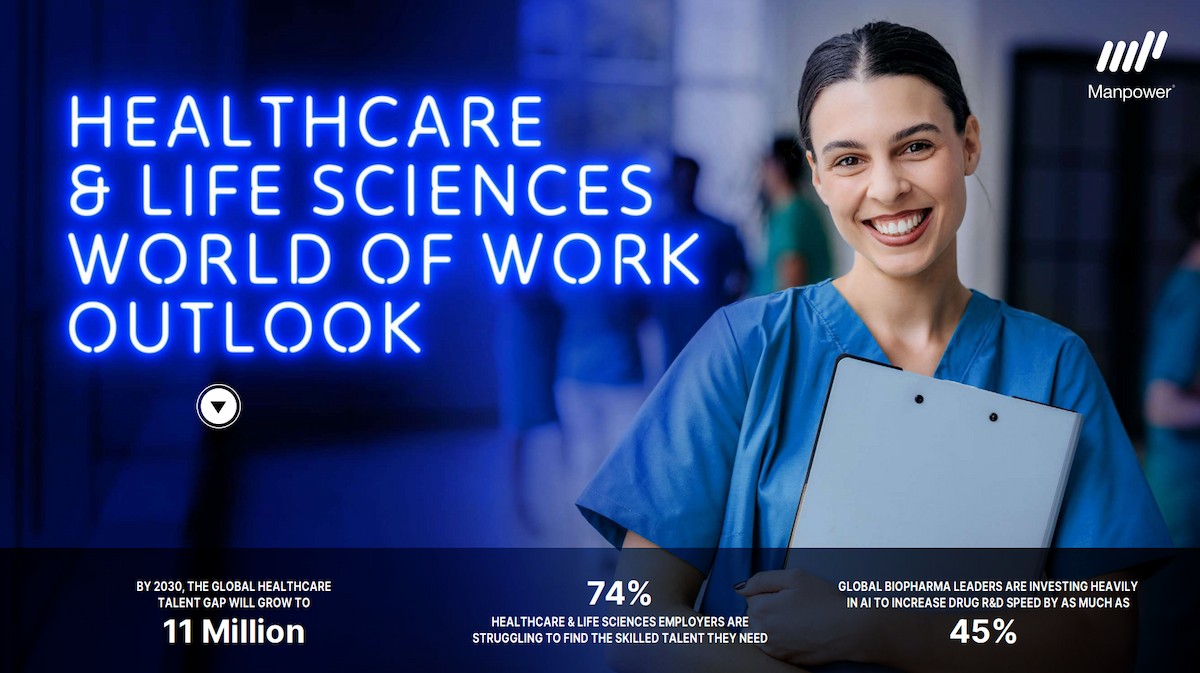
ManpowerGroup’s Healthcare & Life Sciences World of Work Outlook 2026 identifies seven major trends reshaping the global healthcare and life sciences sector as it enters 2027. Despite economic uncertainty, industry growth remains strong, driven by AI adoption, pharmaceutical innovation, expanding home-based care and investment in biomanufacturing. However, workforce shortages present a significant challenge, with 74% of employers struggling to find skilled talent and a projected global shortfall of 11 million healthcare workers by 2030. The report highlights the growing importance of workforce flexibility, reskilling and talent retention to support continued transformation.
Key Findings
- AI Adoption: 67% of healthcare CIOs are actively implementing AI, with 47% already reporting positive returns. However, 71% of life sciences employers and 78% of healthcare employers report no improvement in time to hire, highlighting the continued importance of human oversight and workforce development.
- Industry Growth and Confidence: More than 75% of biopharma and medtech executives are confident in their organisations’ financial outlooks, despite only 41% expressing optimism about the global economy. Healthcare spending is projected to rise by 5.2%, whilst 61% of healthcare and 73% of life sciences leaders anticipate increased merger and acquisition activity.
- Pharmaceutical Patent Expirations: Nearly $300 billion in pharmaceutical revenue will face patent expirations by 2030, peaking at $104 billion in 2027. Companies are accelerating AI-driven research, restructuring operations and prioritising specialised scientific, regulatory and digital talent.
- Growth in Home Healthcare: The global home healthcare market is projected to grow from $309.9 billion in 2025 to $473.8 billion by 2030, an annual growth rate of 8.9%. With 75% of older adults preferring care at home, demand for nurses, caregivers and digitally skilled healthcare professionals is expected to intensify.
- Biomanufacturing and Supply Chains: 76% of biopharma executives expect geopolitical volatility to significantly affect sourcing strategies, whilst 56% anticipate substantial growth in domestic biologics manufacturing. Investment in regional production will increase demand for manufacturing, engineering, quality assurance and regulatory specialists.
- Cybersecurity Threats: 83% of health sector CIOs identify cybersecurity as their greatest business threat, with average healthcare data breaches costing $6.64 million in 2026. Meanwhile, 62% anticipate a significant need for additional cybersecurity talent over the next 12–24 months.
- Persistent Talent Shortages: 74% of healthcare and life sciences employers report difficulty finding skilled workers. Administrative and office support (17%), AI literacy (16%) and HR (15%) are among the hardest skills to source. Employers are increasingly encouraged to prioritise skills-based hiring, targeted reskilling, employee retention and flexible workforce planning.